Friday, 23 October 2015

Research: Narrative Theory - Ms Begum

Research: Narrative Theory - Ms Begum

What is Narrative?

Narrative is the storyline that takes place in the film. The importance of storyline is because without it, the film wouldn't make any sense to the audience. The film should be based on a set of ideas and should follow this throughout so it could make sense. 

Propp
Was a Russian critic and literary theorist, he analysed Russian fairytales in the 1920s. He stated that the characters and their actions fit in perfectly to their defined roles.

  • The Hero - A character that seeks for better things
  • The Villain - Who opposes or actively blocks the hero's quest
  • The Donor - Who provides an object with magical properties
  • The Dispatcher - Who sends the hero on his/her quest via message
  • The False Hero - Who disrupts the hero's success by making false claims
  • The Helper - Who aids the hero
  • The Princess - Acts as the reward for the hero and the object of the villain's plots
  • Her Father - Who acts to to reward the hero for his effort

Todorov
Bulgarian literary theorist claims most narratives start with a state where the protagonist is happy. Then this state is interfered with, by an outside force which has to be destroyed in order for things to go back to normal.


  • Equilibrium - disequilibrium - New Equilibrium 

Barthes
Was a French semiologist and suggested that narrative works with five different codes which activate the reader to make sense of it. (denotation and connotation) 
  • Symbolic (Connotation)
  • Semic (Denotation)
  • Enigma code - This code refers to mystery within a text. Clues are dropped, but no clear answers are given. Enigmas within the narrative make the audience want to know more.
  • Action code - This code contains sequential elements of action in the text. Proairetic elements add suspense to the text.
  • Semantic code - This code refers to parts within the text that suggests or referes to additional meanings. Elements of the semantic code are called Semes. The seme has a connotative function in the text. It has an extra layer of meaning in addition to its literal meaning
  • Symbolic code - This code is about symbolism within the text. It exercises opposites to show contrast and create greater meaning, creating tension, drama and character development.
  • Referential code - This code refers to anything in the text which refers to an external body of knowlegde such as scientific, historical and cultural knowledge.


  • Thriller Narratives:
Thrillers tend to have Barthes structure as they usually have nearly all five of Barthes narrative codes. For example the film paranormal activity portrays The Enigma code as there is unsolved mystery throughout the film, and also creates suspense such as the Action code.

Conclusion
Since learning about the Narratives and which ones are conventional for a thriller, in my opening I will try to use the one which is most fitting for a thriller film, so from what I have learnt, that would be Barthes narrative structure. 


Thursday, 22 October 2015

Scream Opening Scene

Scream Opening Scene

The opening of scream conveys many micro elements that are conventional to the thriller genre. Within this clip we could see a variety of lighting, sound and music, props, costume, and different types of camera angles and shots to express the conventions of thriller.  During this clip we witness mental torture towards the female; she spectates the death of her boyfriend and is also harassed through the phone by the antagonist even after being told to stop repeatedly by the female.

As the scene starts, the setting is within the young, female victim’s home. This suggests to the audience that the female is the main character as she is portrayed as the first victim for the antagonist. This is conventional to a thriller because a thriller film is full of dilemmas and the fact that ‘Scream’ starts off with one, projects the thriller genres stereotype. The use of the low-key lighting creates gloom and doom to the scene which suggests the danger and darkness that’s approaching the female. The antagonist repeatedly calls the female making her feel uncomfortable, he speaks about her private information which leaves the female nervous. As the phone rings, the camera zooms into a close up to the phone He also speaks about her body feature which may make her feel uneasy and harassed as someone has been seeking her body in a sexual manner. The non-diegetic soundtrack that is used when the female feels under pressure after each call, conveys the tension surrounding the scene, the soundtrack has rising sound from different types of instruments each time, causing a unique thrill feeling within the audience. Also the silence of the house enhances the feeling of something scary to suddenly emerge at any moment, keeping the heartbeat rate at a constant high level for the viewers. 

Further into the scene we could recognize the antagonist taking action instead of just producing empty threats. This is conventional to a thriller because it keeps the audience clinging to their seats instead of being bored and getting deceived. The female is instructed to look outside, as she follows; she is frightened at the sight she witnesses. We could see; who we presume is her boyfriend, tied to a chair and highlighted by low-key lighting, the longshot at this moment suggests the gore and disturbance in multiple parts of the body rather than a small area. For example the tied up legs and arms, guts hanging out the stomach and taped mouth, all this wouldn’t be able to be captured in a close up. The effects of the blood and guts pouring out was conventional to a thriller because it would make the audience cringe but curious for the following plots. 

Research: Conventional Thriller Openings - Ms Quinlan

Research: Conventional Thriller Openings - Ms Quinlan


Why are film openings important?

Film openings are really important as they expose the background information and story of what to expect from the film. Also if an opening isn't appealing to the audience its early enough to walk away from and not watch it. For this reason it is really important the opening scene is interesting enough to keep watching but secret enough to keep the audience wondering whats in store. The conventions of a thriller openings lighting and colour are low-key lighting and greyscale colouring. A bit of action to keep the audience interested and paying attention to the screen. Information such as the main characters, a glimpse of the dilemma and also what type of props to be used such as guns and cars is really important for a film opening. 

Analysis of Thriller film openings
The Dark Knight rises:
In the opening scene we could see an extreme amount of action, As it is a Action Thriller film it is enjoyed by its audience. The lighting is high-key which is not really a convention to a thriller film, however it fits in and runs smoothly for the film. We are introduced to a villain and a crime already takes place which is conventional to a thriller. Overall the film seems to have suspense and tension which fits in perfectly for its genre. 


Silence of the lambs:
The opening scene takes place in a forest as you would expect a thriller film to have a setting like this. The background music is classical and builds up tension and curiosity. We are introduced to a female character whom seems to be the protagonist. There doesn't seem to be any blood or gore, not even any violence, which is not conventional for the films genre.


Inception:
We are introduced to the protagonist and antagonist as soon as the film starts. The setting takes place in some kind of old building which is really conventional to a thriller film, also the characters are all dressed smartly in suits which conveys power and danger. There is violent crimes taking place and the building collapses which builds up suspense. Also the fact that all of this takes place due to an envelope builds up feeling of mystery. 

Conclusion
I have learnt the wide variety of conventions for a thriller opening, from learning about the conventional thriller openings I could use this information to make my opening scene really interesting and eye catching for the audience. I have learnt that giving out information has a really big and positive effect towards the audience as it makes them wonder and get drawn in.

Monday, 19 October 2015

Research: Mise En Scene - Costume, Hair and Makeup - Ms Begum

Research: Mise En Scene - Costume, Hair and Makeup - Ms Begum


What is Costume (Hair and Makeup)? Why it’s an important convention? How it helps with character representation and understanding.

Costume is the clothing or prop that a character would wear within an act. Hair and makeup is the style and colour of the hair and the make up applied on to the facial region. Costume is an important convention as it could help change the views on a person. The hair and make up is important, as one actor could play a variety of roles just by applying make up and changing their looks. 

Connotations, Stereotypes of Characters and Clothing Types

From looking at characters and what type of clothes they wear, I could understand the difference between a protagonist and an antagonist by the way they are dressed. For example it would be a typical stereotype for an antagonist to wear dark clothing and protagonist to wear bright clothing.
From the image above we could clearly see that this character from "Fast Five" is a protagonist, his costume is a white shirt and he is also wearing a religious piece of jewelry which suggests his honesty and faith in life. He seems to have no make up which suggest he is straight up and has nothing to hide and also his bald head suggests simple living. 
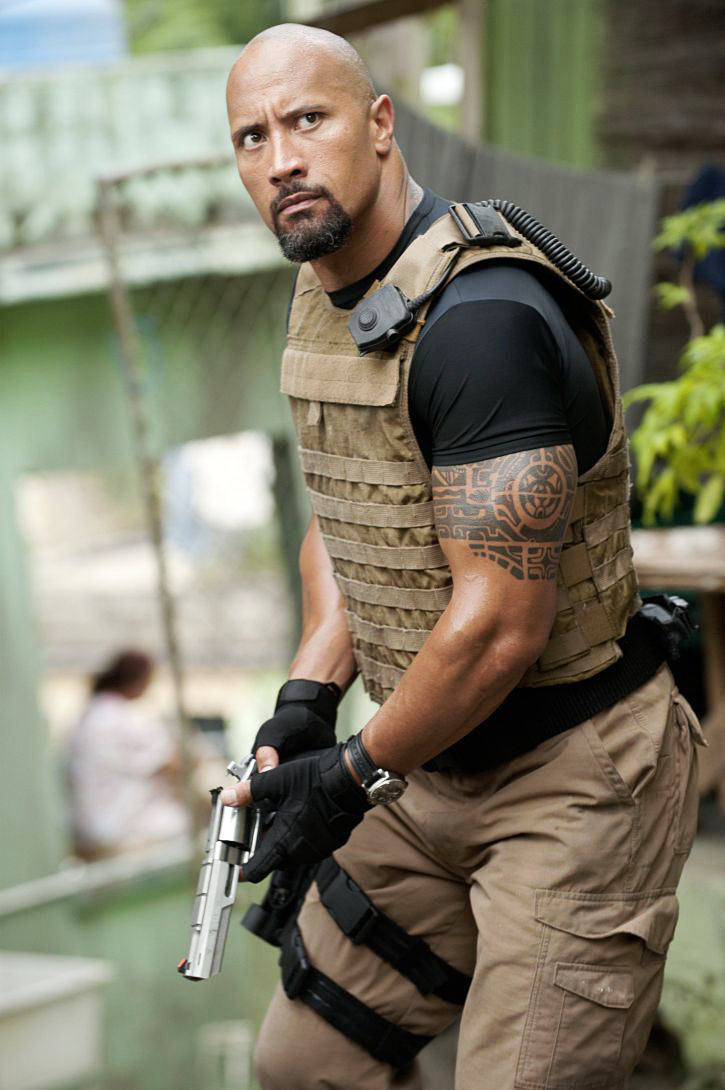
This character is also from the film "Fast Five", however his dark clothing and prop weapon he is holding in his hand may indicate to danger and negativity. He is also bald, however has a bit of facial hair which is typical to a boxer or other type of martial artist. 

Thriller opening analysis – Silence of the Lamb

The opening scene of "Furious 7" shows a guy in a dark suit and a stubble beard. Suits may suggest prestige and power, which isn't really a positive type of character as they usually tend to hurt others to achieve their own goals. 

Conclusion

From what I have learnt about Costumes, Hair and Makeup, I will make sure I use the correct type of costume for my antagonist and protagonist character as I don't want to create a confusion between them. I will also use makeup wisely, to create a character that isn't too exagerated.

Research: Mise En Scene - Body Language and Facial Expression - Ms Quinlan

Research: Mise En Scene - Body Language and Facial Expression - Ms Quinlan

What is body language and facial expressions? Importance as a convention in thriller?


Body language is the way a character would move and act to portray feelings and emotions depending on the scenario time Facial expression is how a person moves the muscles on the face to put it into different positions to illustrate and exaggerate a feeling. The facial expression is really important as it has a bigger role than the body language, especially in a thriller film as fear and excitement could be best presented through facial expression.

Stereotypical Victim and Protagonist – Body Language and Facial Expression


For example the protagonist above demonstrates a facial expression of fear and vulnerability, her position is in what seems to be a shower which may mean that she is experiencing something unexpectedly which is causing this very facial expression. It is conventional for a victim to show a fearful facial expression as they are scared and most likely, in danger.

Stereotypical Antagonist, Ghost or evil characters body language and Facial Expression

As you could see here i have used "Grudge" to portray an antagonist facial expression. Her still and emotionless face presents the cold hearted and fearless attitude she has and acts upon towards her victims. Also the fact that her eyes are fixed upon the camera without hesitation shows she's determined to get what she wants. 

Thriller Opening Analysis


In the opening of "The Purge" we could analyse the cold and emotionless expression on all the characters faces, this could suggest there is literally no protagonists in the film. The sunglasses on the guys face shows the audience he has a level of prestige and likes to stay a mystery. We may be getting this idea as sunglasses tend to effect the flow of communication. 

Conclusion

From learning about Body Language and Facial Expressions i could make sure i portray them in the correct way and manner depending on how my opening scene starts. I could use the typical facial expressions and body languages for the antagonist and for the protagonist to put through to the audience and make it simple but interesting.

Wednesday, 14 October 2015

Research: Mise En Scene - Settings and Iconography - Ms Quinlan

Research: Mise En Scene - Settings and Iconography - Ms Quinlan


What is meant by setting and iconography?

Iconography is the material such as objects that relate to the subject, and the setting is the actual place the scene takes place in. Iconography could for example be the steering wheel and the setting could be within a car, or the iconography could be books within the setting of a library. 

What are typical thriller settings and why?

A typical thriller usually takes place in a dark environment, which tends to be abandoned or lonely. This is mainly because of the fact that loneliness is related to danger, as there is no one about to reach for help if  you was to be at risk. Settings such as; homes, work places after working hours, forests, country sides, train stations at night and any other place that drags along the feeling of loneliness could usually be a good thriller setting. 


Types of setting 


Horror – The setting could take place in a mansion or cottage in a countryside. This would be convenient since it portrays isolation which is a big factor of fear.   

Action – Within an action-thriller the setting could take place in a very busy environment such as a mall, this would increase the tension as it'll be a very easy escape for the character getting away as well as difficult due to the number of people and security such as CCTV. 
Mystery – The setting would probably take place in a home or work place as it involves a variety of people which will cause deception and curiosity. 


Conclusion 


From learning about iconography and setting i will use a setting appropriate to my sub genre for my thriller opening. I could also start listing material for my iconography to make it seem more realistic to the audience.

Research: Mise En Scene - Lighting and Colour - Ms Begum

Research: Mise En Scene - Lighting and Colour - Ms Begum     


What is lighting and colour? Why it is an important convention?


Lighting and colour could determine the brightness or darkness of the setting, the type of colour it should be, to enhance the mood of the scene. For example if it was low key lighting with red or hot white light, it would be stereotypical to a thriller or horror scene. It is important because it increases the emotion and boosts the level of mood. 

Angles of lighting 


Top lighting – Is when the lighting is above the character. This makes the character look weak, powerless, and also could portray innocence. 

Under lighting – Is when the lighting is below the character. This makes the character look powerful, it shows strength and portrays the character as supreme compared to the rest.

Back Lighting – This is when the lighting is behind the character, creating a shadow like effect on the person. It could be used to hide identity and cause curiosity.


Types of lighting 


Low-key – The lighting is dark with small areas of light, which also creates shadows. This may be used in a scene set in a dark room. 

High-Key – When the lighting appears more natural and realistic to our eyes. The lighting effect is lightened to create a more angelic view.

Conventional Lighting in thrillers


The common conventional lighting for thriller films is top lighting and under lighting, This is because it shows contrast between characters as needed and important upon the thriller genre. Thriller lighting tends to be low - key as thriller is meant to be full of mysteries and secrets, so the limited light boosts this feeling.


Conventional Colour in thrillers


Thrillers are usually full of dark and dull colours, as it is not a happy story even if some tend to end with a happy ending. No would really have thrill if a film was lit up by green and yellow colours, this may be because it is stereotypical for light colours to be related to babies or children, for this very reason it would take away the fear and danger in the scene.   

Thriller opening analysis


From watching the Scream opening scene I was able to understand why low key lighting was used throughout, to portray the danger that may be approaching the antagonist. Top lighting is also presented upon the female character to show her weakness within the film. 

Conclusion


From researching lighting and colour, I would use low key lighting throughout my opening scene, as this would give my piece a more fulfilled thriller effect. Also I could use top lighting and under lighting based on how I want to portray each character. 

Monday, 12 October 2015

Research: Editing - Miss Begum

Research: Editing - Miss Begum


What is editing? Why is it an important micro-element?

Editing is adjusting a piece to improve it, it could be removing errors, or adding to improve the flow of the piece. It is usually used to be able to adjust it for the appropriate target audience. It is and important micro-element as it makes the final piece more creative and helps for it to flow without any interruptions.

How is editing used in films?

Editing is used in films to exaggerate an effect, such as an explosion may be edited to make the flames look larger. Or editing may be used to create a more horrifying image when it comes to death or injuries. Also editing could take place within the audio of the film, for example the sound level could rise during an intense part of the film.

Key terms:


Straight Cut – A straight cut is an editing technique which is used in almost all films. It allows one shot to suddenly end and the next shot to abruptly come onto the screen. It allows unnecessary footage to be removed or shortened.Montage – In filmmaking, a montage is an editing technique in which shots are juxtaposed in an often fast-paced fashion that compresses time and conveys a lot of information in a relatively short period.
Montage – In filmmaking, a montage is an editing technique in which shots are juxtaposed in an often fast-paced fashion that compresses time and conveys a lot of information in a relatively short period.


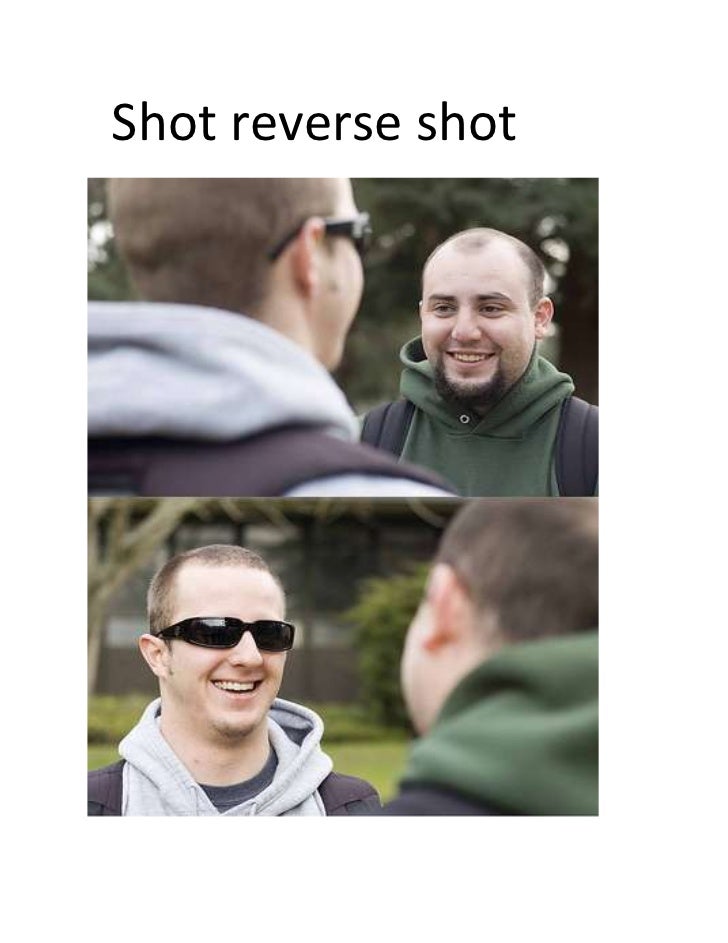
Shot Reverse Shot – Is when the camera switches between to characters whilst they are having a conversation.


Reaction Shot – Is a portrayal of a person's response to an event or to a statement made by another.Slow Editing – Slowing down the scene, slow motion. Commonly used in a fast paced fight scene or a mafia film to emphasise the fact that there is a war between two sides.


Fade to black – Fades the shot to a single colour, usually black or white. The "fade to black" and "fade from black" are ubiquitous in film and television. They usually signal the beginning and end of scenes.

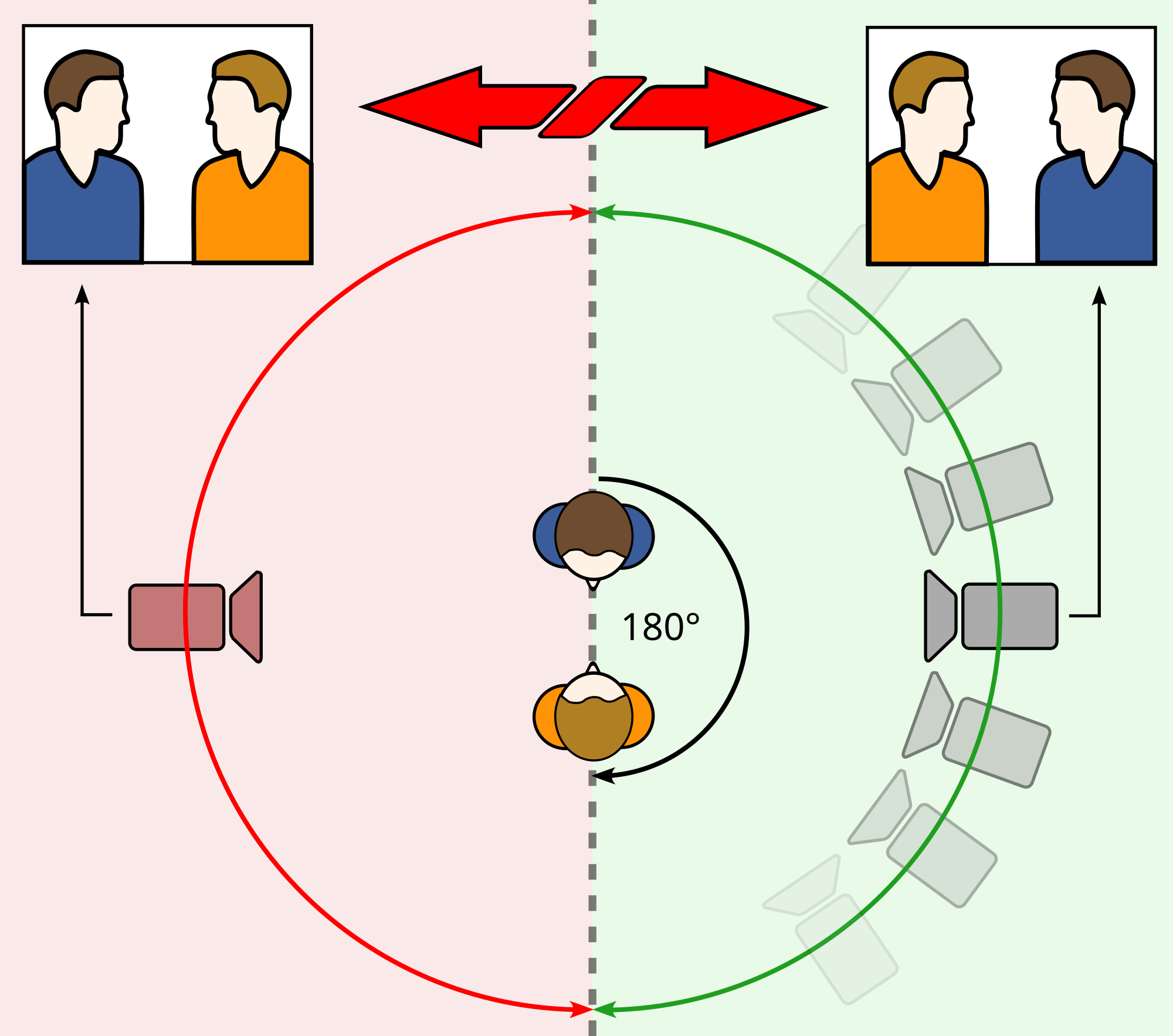
180 Rule –  The 180-degree rule is a basic guideline regarding the on-screen spatial relationship between a character and another character or object within a scene.


Dissolve – The dissolve is a common film technique which is often used as an indicator of a passage of time; therefore the dissolve often falls under the umbrella of the elliptical editing techniques


Wipe – The wipe is the technique where one shot is replaced by another by the movement of an edge, or line, which replaces the previous shot by “wiping” it. By revealing a new scene, environment or space the wipe offers a spatial or temporal transition to the director. 


Trailers
Thriller film trailers usually use fade to black as they do not want to reveal too much but just highlight a fe key moments throughout the film. Fade to black would usually be repeated in a very fast pace to keep the adrenaline pumping and curiosity  at a high level.

Thriller opening analysis
The opening scene of the thriller film "Fast Furious 7" portrays an ultimate amount of editing such as the screen tilting during a fight scene, fade to blacks, and exaggerated explosions. 

Conclusion
Now that I have learnt how editing is used and the effect that it causes on the audience of thriller films, I will be using fade to black repeatedly in my opening scene as it increases tension and curiosity within the viewers. This is because it limits the information going on but produces just enough to leave the audience clinging on to the chair.